
When renovating a facade to improve energy efficiency, we are choosing a complete system, its installation and its maintenance requirements. JUB, Baumit, RÖFIX, Caparol and other established suppliers offer different solutions. The right question is therefore not simply which brand is best, but which system build-up suits the particular building and how it will be installed.
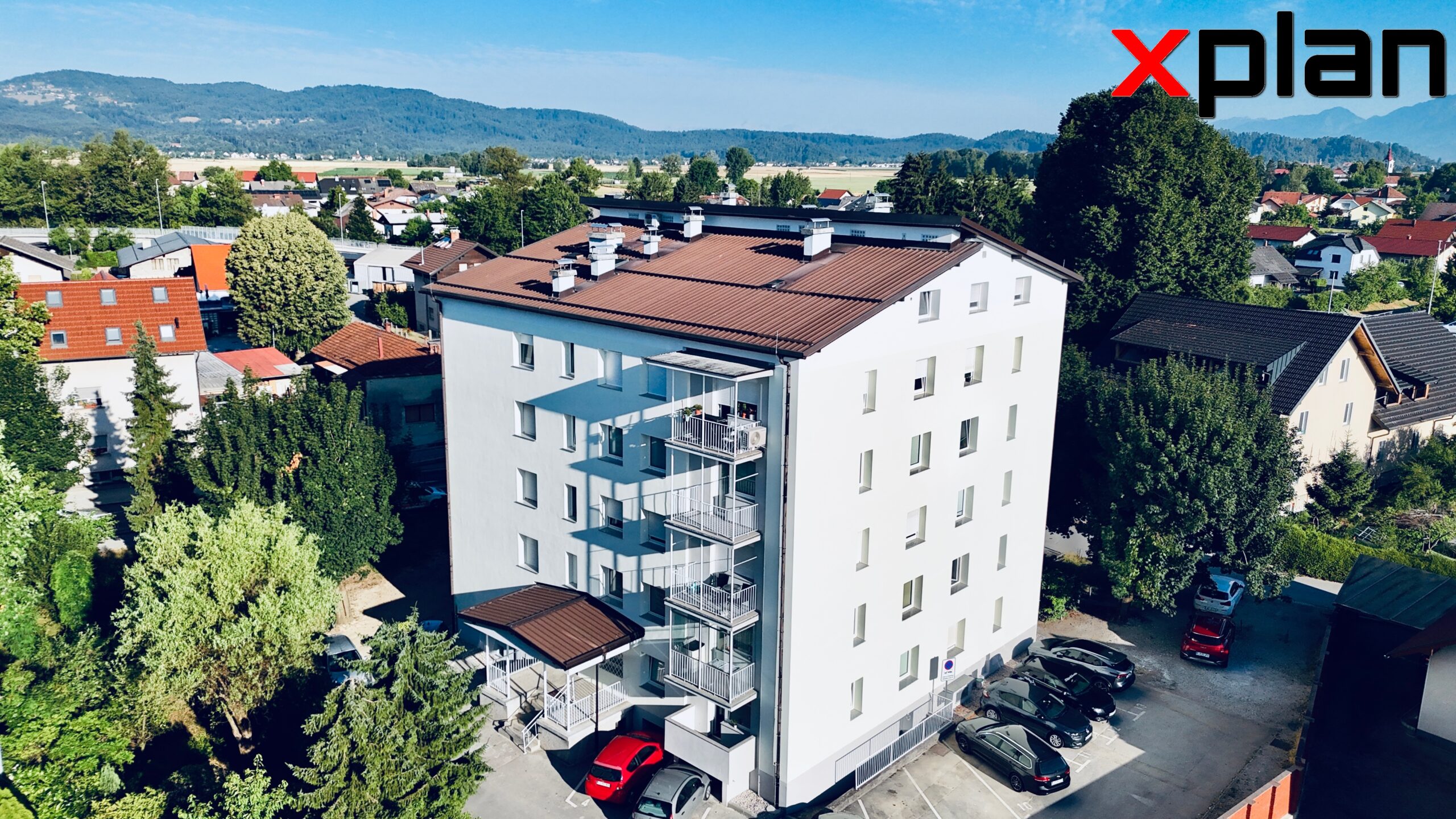
Renovated facade of an apartment building. Photograph from Branko Manič’s personal archive and the archive of Xplan, d.o.o.
At Xplan, we have experience with energy renovations, different facade systems and working with different contractors. Through design and construction supervision, we have seen how much the substrate, construction details and organisation of the works affect the final result. We define Xplan’s role in each project according to the commissioned scope of services.
We want to help clients understand a quotation before making a decision. With a facade, the difference between two quotations is often hidden in the reinforcing coat build-up, the treatment of the plinth, the window sills or the roof junctions. A colour sample and the manufacturer’s name do not reveal these differences.
What we actually buy with a facade system
The most common solution in energy renovations is an external thermal insulation composite system, also known as ETICS. It consists of adhesive, insulation boards, mechanical fixings where required, a reinforcing coat with mesh, a primer where required, finishing render, a finishing paint coating where required, and associated profiles and junction components.
Its properties depend on the complete specified build-up. A good finishing render cannot make up for inadequate bonding, incorrect anchoring or water ingress at a window sill. Nor do arbitrarily selected components become a verified system simply because each one is individually of good quality.
The system holder is the company that specifies and documents the permitted system build-up. The required build-up must be one that the system holder permits and for which it has appropriate supporting documentation. Individual permitted components may also come from different manufacturers. What matters is their inclusion in the documented system, rather than having the same logo on every package.
Which brands are worth knowing
For clients in Slovenia, the main considerations are the availability of the particular system, technical support and the contractor’s verifiable experience. The size of an international group does not, in itself, determine the quality of the facade on an individual building.
The table below provides an overview of the available ranges. It is not a ranking of measured durability or market shares; comparable independent data for all the listed suppliers are not available for such a ranking.
| Supplier | Examples of differences within the range | What the client should check |
|---|---|---|
| JUB | JUBIZOL Strong focuses on increased mechanical resistance. For Ultra, the manufacturer highlights a 25-year warranty covering thermophysical properties. These are different areas of emphasis, rather than a single overall quality rating. | The exact build-up, evidence of the required resistance and the warranty conditions. |
| Baumit | Star EPS uses polystyrene insulation, while Star Mineral uses mineral wool. Different insulation boards and finishing coats are also permitted within a system. | Which version is included in the quotation and which property justifies any additional cost. |
| RÖFIX | LIGHT is an example of an EPS solution, FIRESTOP uses mineral wool, and RenEtics is intended for renovating existing ETICS facades. | Suitability for the existing wall and the documented renovation procedure. |
| Caparol | Capatect BASIC LINE uses EPS, while MINERA LINE uses mineral wool. Other build-ups include carbon reinforcement; DARK SIDE is a range for dark-coloured finishes. | The permitted colour, reinforcing coat build-up and properties of the complete system. |
| Sto | Even within StoTherm Classic, the manufacturer states impact resistance of up to 15 J for the standard combination and up to 60 J for a particularly resistant build-up. The system name alone therefore does not define all its properties. | The exact tested build-up; impact values are not a direct scale of hail resistance. |
| Weber | Saint-Gobain’s range also includes DEMIT systems. The webertherm family range includes EPS, MW with stone wool and GW with glass wool; these are different insulation solutions. | The exact version offered, the insulation and the associated documentation. |
| Mapei | Alongside Mapetherm solutions with rendered finishes, Mapetherm Tile System XL is available for ceramic or certain stone finishes over thermal insulation. This type of finish requires its own system build-up. | The permitted cladding, its dimensions, the substrate and a locally confirmed solution. |
| Ceresit | On the linked page, the manufacturer lists the Ceretherm Universal and Universal MW systems and their ETAs. | Whether the quotation matches the relevant European Technical Assessment and Declaration of Performance. |
| Fassa Bortolo | In the international range, Fassatherm Classic includes EPS, while Plus uses stone wool. The range is also selected according to the insulation type. | Local availability and documentation for the specific build-up offered. |
Examples from official product ranges reviewed on 28. 10. 2026. These differences are not standardised quality classes. Performance claims are manufacturers’ data for particular build-ups; availability in Slovenia and the applicable conditions must be confirmed for the specific building.
Other suppliers on the market include Murexin, Helios, Samoborka and Bekament. A shortlist should be based on the building and comparable quotations. The statement “we always work with this brand” is not enough; the contractor should also present comparable buildings and explain the proposed build-up.
Do manufacturers offer different quality classes?
They offer different ranges and performance levels, but the terms basic, enhanced and specialist system are not standardised official quality classes. Names used by different manufacturers are not directly comparable. A more expensive product is not automatically more suitable for every building.
| Solution level, for ease of understanding | What it usually means | When an additional cost may be justified |
|---|---|---|
| Basic system solution | A documented build-up for ordinary project requirements. | Where the building and its exposure do not require special upgrades. |
| Enhanced solution | An improvement in a particular property, such as mechanical resistance or the properties of the finishing coat. | For heavily used ground-floor areas, exposed locations or more demanding architectural preferences. |
| Specialist solution | A build-up for a particular problem, such as a specific substrate, renovation of an old system or a demanding colour scheme. | When the need has been established through a building survey and the design solution. |
An additional cost must be linked to a demonstrable property. If a supplier proposes better impact resistance, they should identify the build-up and the relevant test evidence. Impact energy figures and hail resistance classes cannot be converted into a single “toughness” rating without explanation.
EPS or mineral wool?
EPS, including graphite EPS, and mineral wool can provide different suitable solutions. The choice affects thermal performance, reaction to fire, water vapour transmission, acoustic properties, weight and installation. Mineral wool is not simply a higher quality class of EPS; it is a different material with different properties.
Thicknesses must be compared together with the thermal conductivity of the insulation and the existing wall build-up. Equal thicknesses of two different insulation materials do not necessarily provide the same thermal effect. In fire safety, the system and its details must be assessed: the non-combustibility of an insulation board does not mean that the complete facade has the same classification.
The claim that every house needs to “breathe through its facade” is too simplistic. Moisture must be assessed in relation to the entire wall, the condition of the building and the use of the rooms; adequate ventilation is a separate issue. If a wall is affected by rising damp or water ingress, the cause must be addressed first.
What to consider for durability and appearance
The plinth and ground floor. These areas are exposed to splashing water, dirt and impacts. They need appropriate insulation, treatment and a connection to the waterproofing. A stronger render on the rest of the facade cannot replace a properly designed and executed detail.
Dark colours. They may be feasible, provided the colour choice and system build-up have been checked. A darker surface can become hotter in sunlight. The manufacturer’s restrictions, the HBW light reflectance value and, where necessary, TSR total solar reflectance must be taken into account; selecting a colour number alone is not enough.
Algae and mould. The risk is affected by shade, trees, moisture retention, water drainage and surface properties. No facade should be presented as permanently protected against algae under all conditions. The cleaning and maintenance method should also be checked for the chosen solution.
An existing facade. In some cases, new insulation can be added over an old system, but only after assessing load-bearing capacity, moisture, the existing layers and fixings, and selecting an appropriate renovation procedure.
Additional painting of render, and Slovenian and German guidance
Is a facade with coloured finishing render already complete, or should it also be painted? The answer depends on the chosen system, the render type and the purpose of the coating. Here, we mean facade paint applied over render, rather than a further application of textured render.
Slovenian professional guidance
The Slovenian industry Technical Guideline GIZ PFSTI TS PFSTI 01, edition 2/2020, addresses additional coatings. Section 8.11.4 permits additional coatings in accordance with the facade system manufacturer’s recommendations. For coloured mineral renders supplied in powder form, section 8.11.2.2 describes a system-compatible coating as a sensible solution because colour variations may occur. This does not mean that all facades should be painted in the same way.
This is an industry technical guideline. For a particular building, the solution, design and installation must comply with the applicable requirements and the documentation of the selected system. German technical sources can provide an additional basis for assessing details.
German standards, guidelines and manufacturers’ instructions
An equalisation coat (Egalisationsanstrich) is intended primarily to provide a uniform colour on new mineral renders. In sections 8.8.9 and 8.8.10, the 2025 German VDPM guidelines for rendering masonry and concrete distinguish this generally single aesthetic coat from a complete facade coating system. For ETICS, the solution must also be coordinated with the system holder’s documentation.
| Treatment | Main purpose | What we check |
|---|---|---|
| Coloured finishing render | Weather protection as part of the complete system, texture and colour appearance. | Whether the specified build-up also requires subsequent painting. |
| Equalisation coat | Achieving a uniform colour, particularly on mineral render. | The permitted paint, the required extent of application and whether the render has dried sufficiently. |
| Complete protective coating system | Required surface protection properties in addition to colour appearance. | Substrate preparation, any primer, the number of coats and the application rate. |
A single equalisation coat does not amount to complete additional protection for the facade. The German coatings manufacturers’ association VdL states that at least two coats are needed for a facade coating to fulfil its full function. The actual application must follow the selected system and the manufacturer’s instructions. VdL explanation.
References to a “German standard” need to be precise. DIN 55699:2017-08 addresses the use and installation of certain ETICS, while DIN 18363:2019-09 covers painting and coating work under the German VOB/C technical contractual rules. This does not establish a universal rule that every finishing render must be white and then painted.
In its technical guide to ETICS (July 2026 edition), the manufacturer KEIM explicitly describes pigmented renders and provides for at least one equalisation coat in design and bills of quantities. For its Stucasol silicate render, it allows this coat to be omitted with the agreement of all parties involved. Colour in the render and subsequent painting can be combined.
Examples of Slovenian manufacturers’ instructions
Additional painting is also specified in particular Slovenian product instructions. The Slovenian RÖFIX 715 technical data sheet, dated 15. 10. 2026, requires painting when this render is used on an external thermal insulation system. Painting is also required for the pigmented version of this render. The Slovenian Weberton technical data sheet describes two coats of silicone facade paint on new renders and thermal insulation systems. These are instructions for particular products, rather than a requirement for every facade supplied under these brands.
Additional painting requires materials and labour and affects the quoted price. It is therefore sensible to price the technically permissible basic build-up and any protective upgrade separately. Publicly available instructions do not establish how often additional painting is actually carried out or omitted because of cost in Slovenia; these sources also do not reveal the motives of individual suppliers.
What we recommend at Xplan
At Xplan, as a design and engineering company, we recommend using the relevant Slovenian technical guidance and supplementing it appropriately with verified German good practice when designing a facade and agreeing on installation checks. Before quotations are collected, it should be clear whether painting is a required part of the system, an agreed aesthetic equalisation treatment or a justified protective upgrade. The assessment may also conclude that additional painting is unnecessary.
Where the objective is additional protection, we recommend a coating build-up that is justified by the design and compatible with the system, with specified coats and application rates. The particular solutions and inspection points must be coordinated with the building’s requirements, the system holder’s documentation and the commissioned scope of design or construction supervision.
The selected paint may improve particular surface protection properties, but it does not replace correct reinforcement, protection against water ingress or an assessment of a damp substrate. Nor should additional painting be expected automatically to increase the complete system’s resistance to impacts and hail. Its purpose, properties and maintenance must be clearly defined.
A warranty is only as useful as its conditions
We need to distinguish between a material warranty, a warranty for system properties and responsibility for installation. The length of the stated period alone does not tell us whether cracks, water ingress, algae, colour changes and remedial costs are covered.
For example, JUB states extended periods for certain selected systems, and a 25-year warranty covering thermophysical properties for JUBIZOL Ultra. This is not the same as a 25-year guarantee against every possible issue affecting a facade. The specific conditions and maintenance obligations must also be read for other suppliers. JUBIZOL Ultra description, example of Caparol’s conditions.
Before placing an order, request a written explanation of who provides the warranty, which property it covers, for how long, under which conditions and how claims are handled. At handover, the documentation must correspond to the system actually installed. The warranty period should not be equated with the facade’s service life.
How to compare quotations and contractors
Comparing the price per square metre is useful only when quotations cover the same works. In particular, check:
- the exact system build-up, insulation, thickness and designed thermal performance;
- substrate preparation, bonding, anchoring and reinforcement;
- the plinth, reveals, window sills and junctions at windows, balconies and the roof;
- scaffolding, protection of the surroundings, waste removal and tax treatment;
- the contractor’s references, supervision of the works and handover documentation;
- whether the selected system requires painting, and its purpose, coats and price;
- warranty conditions and instructions for use and maintenance.
For an apartment building, condominium owners should have a common technical basis, a clearly defined scope and an agreed decision-making process. This allows condominium owners and the property manager to compare quotations against the same requirements and better understand what they are paying for.
At Xplan, depending on the agreed scope, we can assist with reviewing the project requirements, preparing design solutions and a bill of quantities, or providing construction supervision. The aim is to identify unresolved issues before they become expensive repairs. Tell us about your building.
Technical summary
The selection of ETICS must be based on the condition of the substrate, the building’s requirements and the documented system build-up. Thermal and fire properties, mechanical resistance, water drainage details, feasibility, and maintenance and warranty conditions must be compared. The brand is part of the assessment; the decision must relate to the exact solution and the quality of installation. For the finish, colour equalisation must be distinguished from a complete protective upgrade, and any painting must be specified in accordance with the system documentation and included in the quoted scope.
Summary for everyone
A good facade is a suitable system, correctly installed on your building. Before accepting a quotation, check everything it includes, who will monitor the works and who will address any defects. Paying more for a better solution makes sense when you know which specific problem it solves. Also ask whether painting is required by the selected system, whether the price includes it and whether its purpose is a uniform colour or additional protection.
Related reading: Facade renovation starts with a building survey and a bill of quantities that enables comparison.